Events
Exhibition: WANTH. WE ALL NEED TO HEAL
August 23, 2024, Aberdeen : https://2024.vsac.eu/
Title: The artist’s trace / tracing the artist
Abstract: Drawing is an ancient human activity, ubiquitous in childhood but rarely performed at expert levels in adulthood. Furthermore, the external world is saturated with drawn images that often require decoding in terms of an artist’s actions and intentions. What psychological mechanisms support the development of expert drawing ability and to what extent is the process of drawing reflected in the artist’s trace? To address these questions I will outline the degree to which modulations in perception and attention support expertise in drawing. I will then present emerging evidence that observing drawings engages embodied mechanisms, holding a mirror to the process of drawing itself. These complementary perspectives shed light on the nature of drawing as both an act and an outcome.
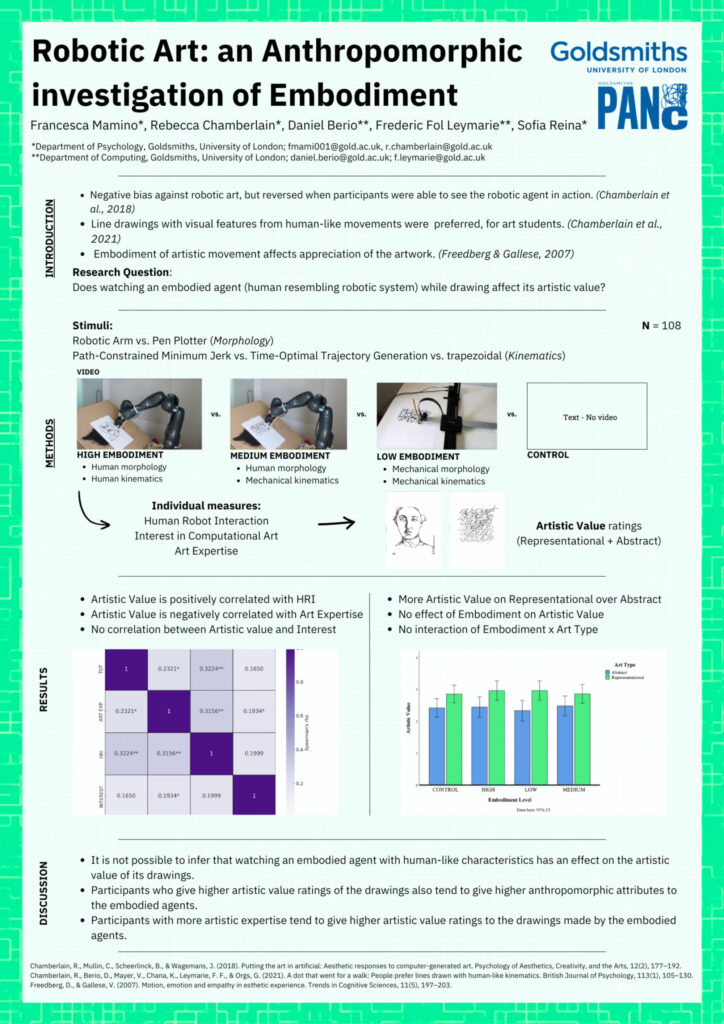
Poster presented by Francesca Mamino @ VSAC 2024
Co-authors: Rebecca Chamberlain, Daniel Berio, Frederic Fol Leymarie, Sofia Reina
Abstract: Previous research suggests that people prefer abstract line drawings made with human-like kinematics (Chamberlain et al., 2021), implying an embodied aesthetic experience tied to the artist’s motion during creation (Freedberg & Gallese, 2007). It has also been found that watching a robotic arm drawing also has a positive effect on the aesthetic evaluation of the resulting drawings, again suggesting some role of embodiment in aesthetic perception (Chamberlain et al., 2018). Taking these findings into account, the current study investigates the influence of embodiment on aesthetic evaluation in drawings made using robotics. By systematically modulating the human-like features of robotic systems we can investigate whether human resemblance plays a role in aesthetic responses to robotic drawings. Specifically, we manipulated two core aspects of human resemblance: 1. Movement (the degree of humanness of the movement), and 2. Anthropomorphism (the degree of human resemblance of the machine to a human arm) in a between-subjects design with four conditions. Participants either: 1. Watched a video of a robotic arm with human-like kinematics (human movement and high anthropomorphism) 2. Watched a video of a robotic arm with uniform kinematics (Machine movement with high anthropomorphism) 3. Watched a video of an Axiplot machine with uniform kinematics (Machine movement with low anthropomorphism) 4. Read a piece of text with some information about the machines (Control). Participants were then asked to rate a series of drawings made by the robotic systems under investigation, alongside some individual difference measures of art preference and attitudes to robotics. Data collection is currently ongoing (target sample size = 160). Our hypothesis is that the conditions including human movement and anthropomorphism will lead to higher aesthetic evaluation of the resulting drawings relative to conditions without either human kinematics or anthropomorphic robotic forms.
We kickstarted the Artists in Residence program with a two-day workshop. The first day was hosted by Goldsmiths, University of London. Our core team introduced our research in various domains: human cognition by Rebecca Chamberlain, sociology by Tomoko Tamari, and computer science by Michael Strow and Daniel Berio. The second day was hosted by the Victoria and Albert Museum and featured artistic presentations by core team artists Daniel Berio and Liat Grayver. This was followed by presentations of new projects by our Artists in Residence: Gretta Louw, Patrick Tresset, Anna Mirkin, and Licia He.

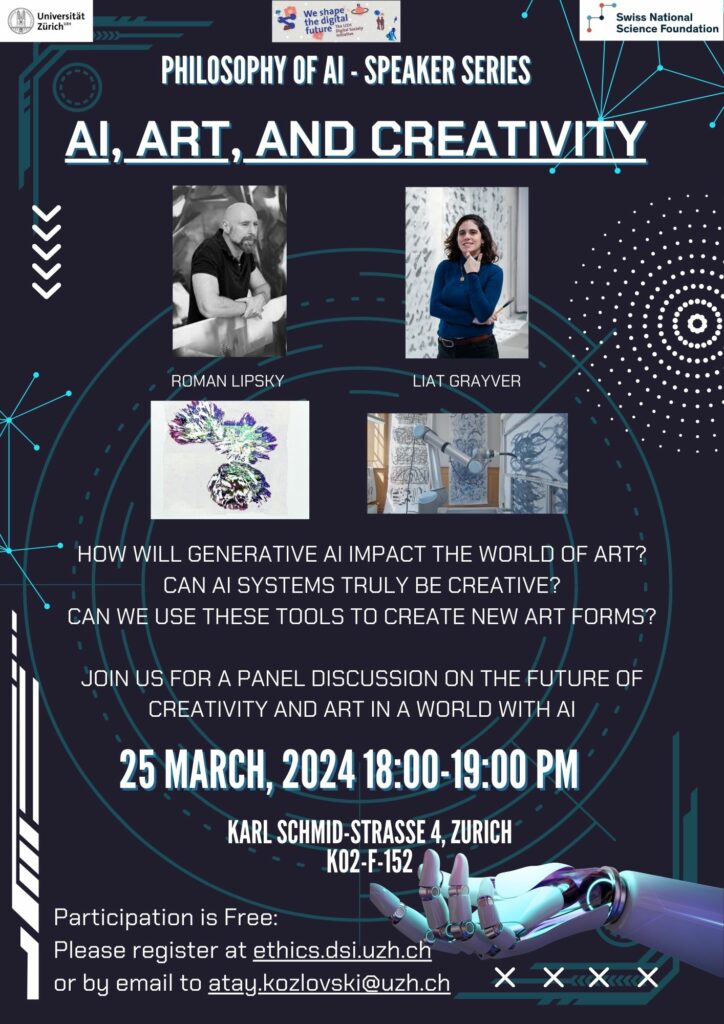
Philosophy of AI – Speaker series with Roman Lipsky and Liat Grayver.
link for online participation: https://uzh.zoom.us/j/62103774684?pwd=MHJZZGJFT0NJOEhGLzFhS1hqaWh0dz09
- The role of AI in shaping diversity and inclusion.
- Strategies to mitigate bias and promote fairness in AI algorithms.
- Opportunities for leveraging diversity to enhance AI innovation.
Engage in insightful discussions, share your perspectives, and collaborate towards a more inclusive AI future and contribute to the programme:
- EDI, AI and Creative Health.
- Creative AI
- Brokering: Presentation of project pitches by internal and external researchers
- Showcasing: EDI&AI@Westminster: interactive sessions, Demonstrations, Posters, Videos, etc.
- Panel: EDI and creative AI
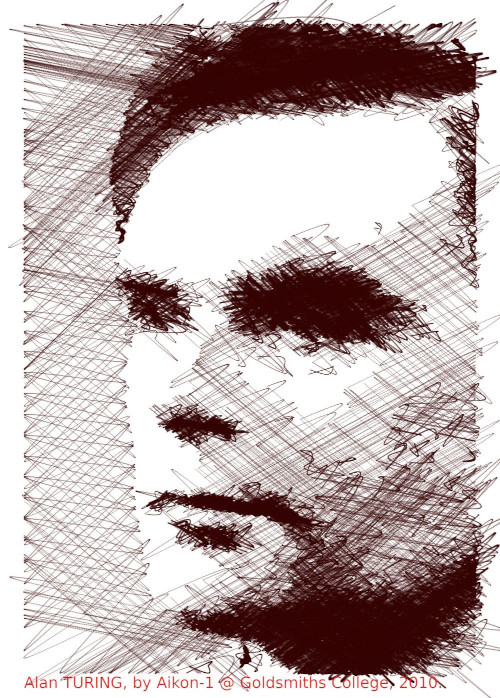
Invited Talk (EDI & Creative AI: Prof Frederic Fol Leymarie, Goldsmith, University of London) and Panel “EDI and creative AI” as part of the Alan Turing Institute’s Fringe event
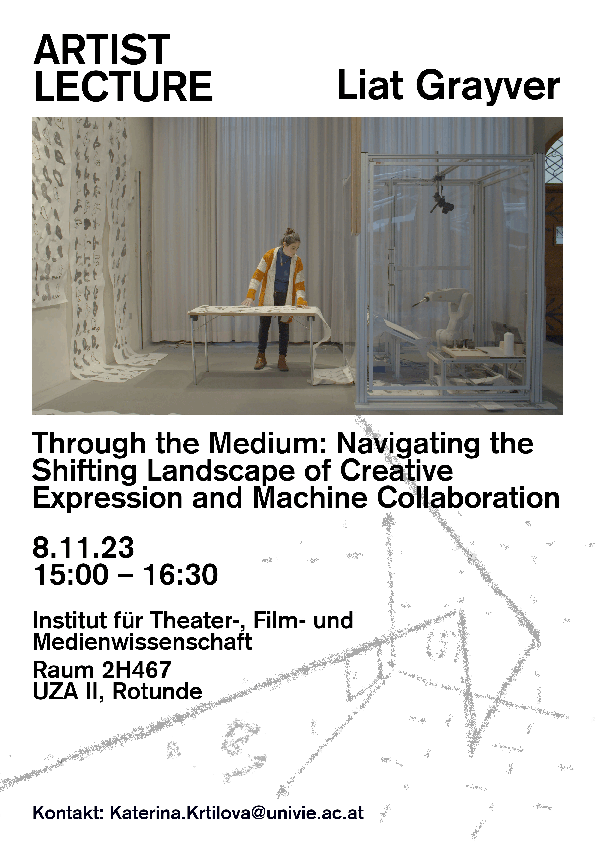
“Through the Medium: Navigating the Shifting Landscape of Creative Expression and Machine Collaboration”
While interest in NFTs is lagging, a whole host of artists are moving forward the conversation around A.I.
“(P)anel discussion that delves into the fascinating realm where artificial intelligence intersects with the creative process. Led by esteemed experts in the field, including Prof. Frederic Fol Leymarie (chair), Piotr Mirowski (DeepMind & Improbotics), and Massimo Magee, this thought-provoking session will explore how AI might revolutionizing the creative process.”
Co-organised by Goldsmiths (co-chair: Prof. Frederic Fol Leymarie)